 Pulses & Grains
- Home
- Products
- Pulses, Lentils & Grains
- Moth Beans (Matki)
Pulses, Lentils & Grains
Moth Beans (Matki) Exporter & Bulk Supplier from India
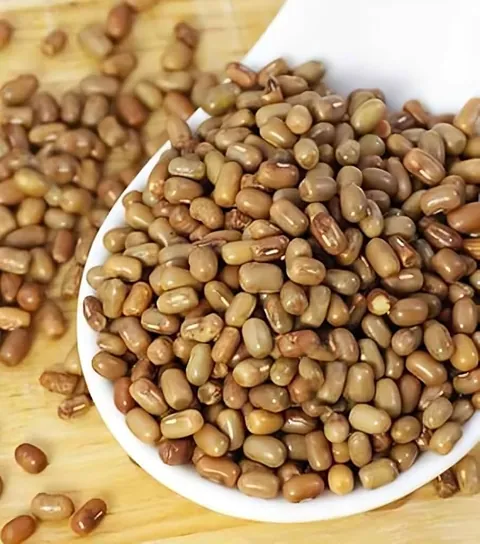
Moth beans (matki) are a drought-hardy pulse grown mainly in Rajasthan and are valued for sprouted dishes, snacks and traditional curries. VegTradeHub supplies cleaned and sorted moth beans to importers, snack manufacturers and ethnic-food wholesalers.
- Export grade
- Private label
- Samples on request
- Terms mutually agreed
Moth Beans (Matki) — overview
Arid-zone moth beans for sprouting, snacks and traditional dishes.
Dal from Rajasthan Moth bean (Vigna aconitifolia), locally known as matki or moth, is a hardy, drought-tolerant legume native to the arid and semi-arid zones of northwestern India. The Marwar region — encompassing Jodhpur, Pali, and Nagaur — produces moth beans with distinctive nutty flavour, high protein content (22–24%), and excellent sprouting viability, making them prized for both traditional cuisine and modern food processing.
VegTradeHub sources moth dal directly from farmer collectives in western Rajasthan, where the crop thrives on minimal rainfall (300–400 mm annually) and sandy-loam soils. The beans are harvested at physiological maturity, sun-dried on clean threshing floors, and transported to our Jodhpur packhouse for mechanical cleaning, grading, and packing under hygienic conditions. We supply whole matki for sprouting and snack applications, split moth dal for quick-cooking dal preparations, and moth besan for besan-based snacks and gluten-free formulations.
| Common names | Moth Beans (Matki), Matki, Moth Dal, Turkish Gram, Vigna aconitifolia |
|---|---|
| Botanical name | Vigna aconitifolia |
| Category | Pulses, Lentils & Grains |
| Origin regions | Jodhpur, Pali, Nagaur, Barmer districts, Rajasthan |
| Season / supply | October – December (kharif); March – April (zaid in irrigated areas) |
| Available forms | Whole (matki), Split (moth dal), Flour (moth besan) |
Why buy moth beans from VegTradeHub
Specification-led supply
Limits for purity, moisture and key quality parameters are agreed in writing before production.
Lot-wise analysis
A certificate of analysis accompanies each lot, and third-party inspection is available on request.
Documented and traceable
Export documents are checked before dispatch, with lot traceability from packing back to source.
Packing to your brief
Bulk bags, cartons and private-label retail packs, loaded to suit sea, air or land shipment.
Specification
Typical export specification. Final limits are agreed in the contract and confirmed by the lot certificate of analysis.
| Parameter | Grade A (Premium) | Grade B (Standard) | Grade C (Processing) |
|---|---|---|---|
| Form | Whole matki / Split dal | Whole matki / Split dal | Split dal / Flour |
| Seed size (whole) | 3.5–4.5 mm, uniform | 3.0–5.0 mm, slight variation | 2.5–5.5 mm, mixed |
| Split uniformity | 95% clean splits, minimal brokens | 85% clean splits, <5% brokens | 70% splits, higher brokens |
| Colour (seed coat) | Light brown to tan, uniform | Light to medium brown | Variable, some discoloration |
| Cotyledon colour | Bright yellow, uniform | Yellow, minor variation | Pale to dull yellow |
| Foreign matter | ≤0.1% (zero stones, metal) | ≤0.25% | ≤0.5% |
| Damaged / discoloured | ≤0.5% | ≤1.5% | ≤3.0% |
| Weevilled / bored | Zero tolerance | ≤0.5% | ≤1.0% |
| Moisture content | ≤11% | ≤12% | ≤13% |
| Protein (dry basis) | ≥23% | ≥21% | ≥19% |
| Sprouting germination | ≥95% | ≥85% | N/A (split) |
Origin advantage
Agro-climatic suitability
The Marwar region's hot days, cool nights, and low humidity during the growing season (July–October) create ideal conditions for moth bean. The crop's deep taproot accesses subsoil moisture, while high solar radiation drives photosynthetic efficiency. This natural stress adaptation concentrates protein and reduces anti-nutritional factors, yielding beans with superior nutritional density and cooking characteristics compared to irrigated-region production.
Soil profile
Sandy loam to loamy sand soils (Typic Torripsamments) with low organic matter (0.3–0.5%), pH 7.5–8.2, and excellent drainage dominate the Jodhpur–Pali–Nagaur belt. These soils warm quickly after monsoon onset, promoting rapid germination and early vigour. The low clay content minimises soil adhesion on harvested pods, reducing post-harvest cleaning requirements and mechanical damage during threshing.
Traditional farming expertise
Generations of Marwar farmers have refined moth bean cultivation — from seed selection (local landraces like Jwala, RMO-40, and CZM-2) to intercropping with pearl millet (bajra) and cluster bean (guar). Traditional knowledge guides optimal sowing windows (first fortnight of July), seed rates (12–15 kg/ha), and harvest timing (when 80% pods turn brown). VegTradeHub partners with farmer producer organisations (FPOs) that blend this heritage with modern GAP protocols.
Logistics connectivity
Jodhpur's strategic location offers multi-modal export access: Jodhpur Airport (JDH) handles perishable air freight to GCC and Southeast Asia; Jodhpur Junction connects to the Dedicated Freight Corridor for rail reefer movement; NH-62 and NH-25 link to Mundra (350 km) and Pipavav (420 km) ports for sea freight. Our packhouse at Boranada Industrial Area, 15 km from Jodhpur city, operates 24/7 during peak season with direct reefer plug points.
Packaging options
- 25 kg / 50 kg PP woven bags with liner — Standard for full-container sea freight; stackable and moisture-protected.
- 25 kg kraft paper bags — Plastic-free option for markets and brands with sustainability requirements.
- 500–1,000 kg FIBC bulk bags — For industrial processors with bulk handling.
- Retail and private-label packs — Pouches, jars and cartons from small consumer sizes, with your artwork, language and barcode.
Storage & shelf life
Store in a cool, dry, well-ventilated place away from strong odours, in sealed packaging, off the floor.
| Parameter | Recommendation |
|---|---|
| Temperature | 10–15 °C (cool, dry); ≤10 °C for extended storage >6 months |
| Relative humidity | 55–65% (prevents moisture uptake and mould growth) |
| Air circulation | Continuous, uniform; avoid direct airflow on bag surfaces |
| Pest management | IPM programme: pheromone traps, phosphine fumigation per ISPM-15 if required |
| Stacking | Max 10 bags high on pallets; use pallet spacers for airflow |
| Segregation | Store away from strong odours, chemicals, and high-moisture commodities |
Grade A (Premium): 12–18 months at 10–15 °C / 55–65% RH. Maintains germination viability >90%, cooking quality, and nutritional profile. Suitable for sprouting and premium retail. Grade B (Standard): 10–12 months under cool, dry storage. Minor colour darkening over time; cooking and nutritional quality remain excellent for dal and processing use. Grade C (Processing): 6–9 months — intended for near-term milling, flour production, or snack manufacturing. Higher brokens and moisture accelerate quality decline.
Applications & end uses
Sprouting & health food
Whole matki (Grade A) is the preferred choice for commercial sprout houses, organic brands, and health-food manufacturers. High germination rate, crisp texture, and mild nutty flavour make it ideal for ready-to-eat sprouts, sprout powders, and functional food formulations.
Dal milling & quick-cook products
Split moth dal cooks in 15–20 minutes without pre-soaking — a major advantage for quick-cook dal packs, ready-to-eat meals, and institutional catering. Consistent hydration and low foaming simplify large-scale kettle cooking.
Food processing & ingredient supply
Moth bean protein concentrate and isolate are emerging ingredients for plant-based meat analogues, protein bars, and sports nutrition. The bean's balanced amino acid profile (high lysine, adequate methionine) complements cereal proteins. VegTradeHub supplies identity-preserved lots for protein extraction facilities.
HORECA & food service
Hotels, restaurants, cloud kitchens, and catering chains source split moth dal for daily menu items (dal tadka, matki chi usal, sprouted salads). 10 kg and 25 kg food-service packs with tamper-evident seals ensure portion control and hygiene compliance.
Export distribution & re-export hubs
Dubai, Singapore, Rotterdam, and Colombo serve as re-export hubs for moth dal to wider MENA, SE Asia, and EU markets. VegTradeHub supports mixed-container loads combining moth dal with other Rajasthan pulses (moong, chana, urad) and spices for consolidated buyer programmes.
Shipping & documents
Sea freight in 20 ft or 40 ft containers from Mundra, Pipavav or Nhava Sheva; air freight for samples and urgent lots; land routes to neighbouring countries.
Standard documents: commercial invoice, packing list, certificate of origin, phytosanitary certificate, certificate of analysis, bill of lading or air waybill, plus treatment or health certificates where your authority requires them.
Payment terms: Payment terms are not fixed: buyer and seller discuss and agree terms that suit both sides, and we record them in the proforma invoice or sales contract before the order is confirmed. How we agree terms →
Moth Beans export markets
We supply importers of moth beans in:
Frequently asked questions
What is the difference between moth beans and mung beans?
Moth beans are smaller, brownish-green and more drought-tolerant than mung beans. They are often sprouted or used in snacks such as bhujia and traditional Rajasthani dishes.
Do you offer samples of moth beans?
Yes. We can arrange a sample from the lot for your approval before a commercial order. Please send your delivery address and target specification.
What are the payment terms for moth beans?
Payment terms are agreed between buyer and seller for each order and recorded in the proforma invoice or sales contract. We aim for terms that suit both sides.
Which documents come with moth beans shipments?
Commercial invoice, packing list, certificate of origin, phytosanitary certificate, certificate of analysis and bill of lading or air waybill, plus any additional certificate your authority requires.
Related products
Pulses & Grains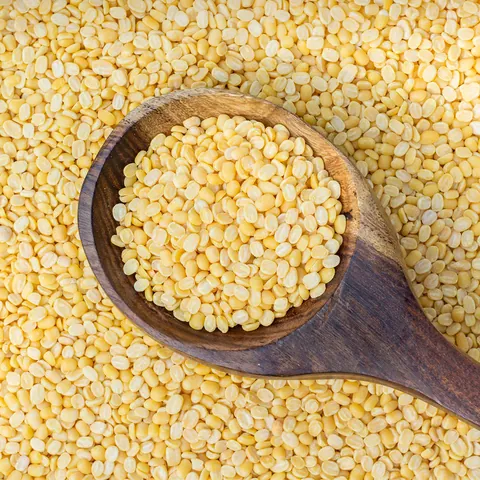 Pulses & Grains
Split Mung Dal (Moong Mogar)
Uniformly dehulled yellow split mung dal for retail, HORECA and snack makers.
 Pulses & Grains
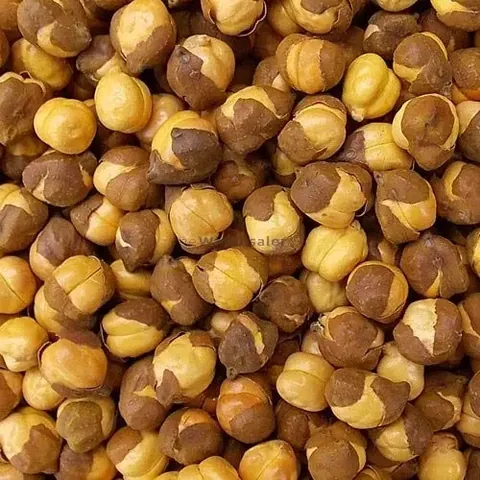
Chickpeas (Chana)
Desi and kabuli chickpeas, sorted and graded for milling, retail and processing.
Request a quote
Get your bulk quotation within 24 hours
Tell us the product, quantity and destination. We reply with availability, specification and pricing, and agree payment terms with you that suit both sides.
- Free samples on request
- Private-label packing
- Full export documents